Most homeowners assume a ceiling leak means roof replacement. That is rarely true. We isolate the exact failure point before recommending any repair.
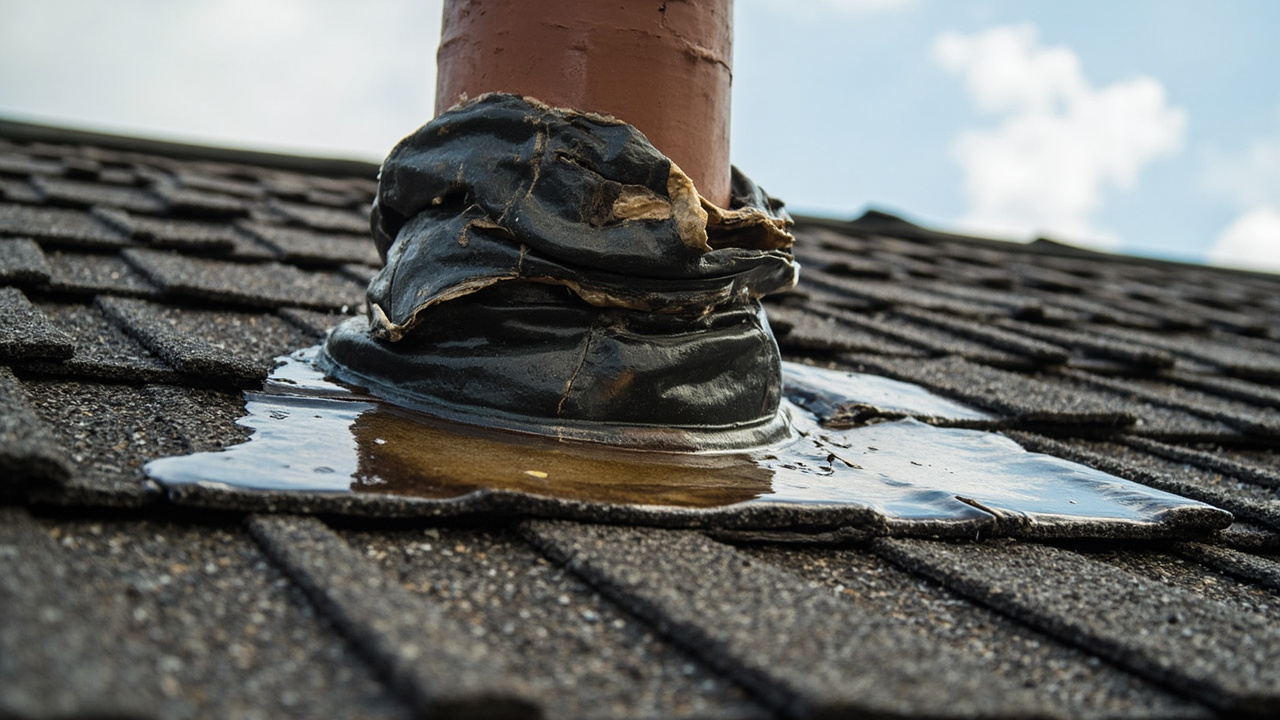
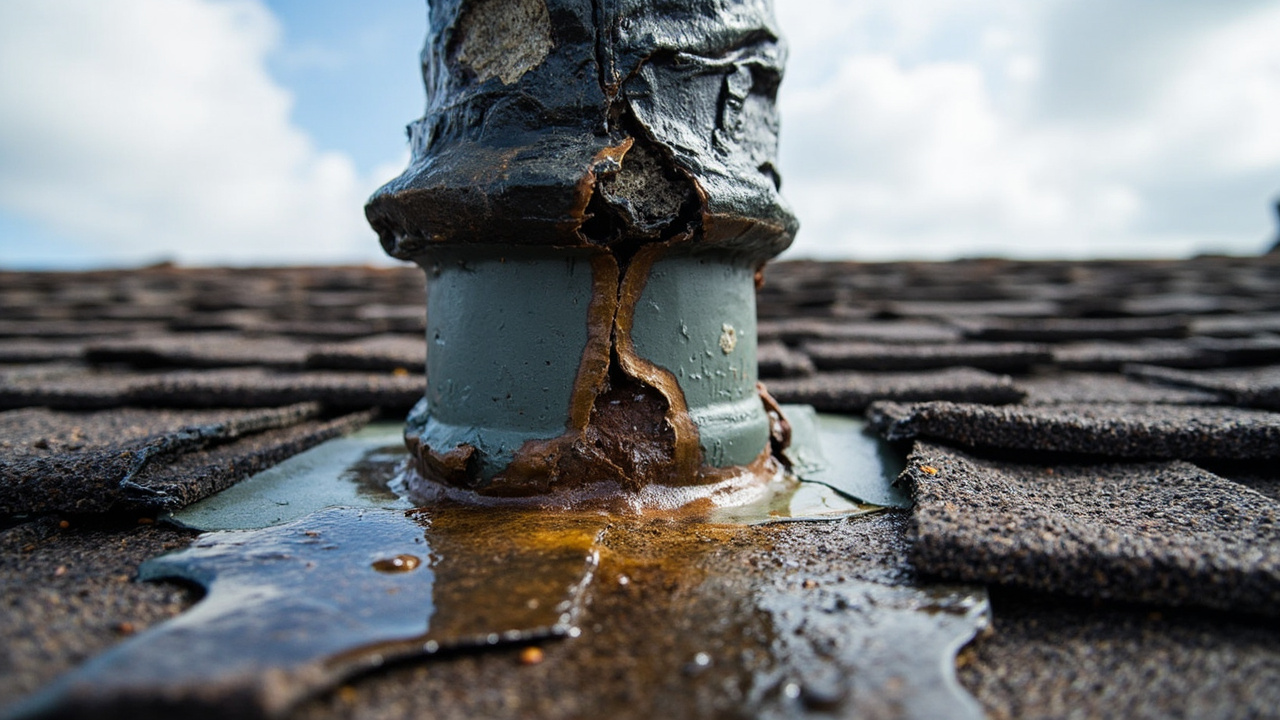
Our diagnostic process starts on the roof, not in your attic. We inspect every plumbing vent boot, examining the rubber collar for surface cracks, hardness, and separation from the pipe. A dry rotted neoprene gasket feels brittle when you press it. The rubber loses elasticity and pulls away from the vent stack, creating a gap where water enters.
We check the metal base flashing under the boot. Corrosion happens where the aluminum or galvanized steel meets the shingle surface. If the base has rusted through, replacing only the rubber collar will not stop the leak. We remove the damaged component entirely and install a new integrated flashing system.
For active leaks, we trace the water path inside your attic. Water does not drip straight down. It follows roof decking seams, runs along rafters, and pools in insulation before finally soaking through drywall. We mark the entry point with photos, then explain exactly what failed and why.
The repair method depends on the roof type and boot condition. On asphalt shingle roofs, we remove the shingles surrounding the vent stack, extract the old flashing assembly, and install a new pipe boot with a powder-coated aluminum base and EPDM rubber seal. We integrate the flashing under the upper shingles and over the lower course to create a layered watershed.
On older Memphis homes with original cast iron vent stacks, the pipe diameter may not match modern boot sizes. We use adjustable retrofit boots with stainless steel clamps that seal against irregular pipe surfaces. This prevents the gap that causes most leak recurrences.
We do not use caulk as a primary seal. Caulk fails within two years on Memphis roofs. Proper flashing relies on mechanical layering and compression fit, not adhesive bonds.